How Big Is the Kitchen in Pickleball? Detailed Size Guide
The kitchen in pickleball, officially known as the non-volley zone, measures 7 feet from the net on each side. This means the kitchen extends 14 feet total across the width of the court, spanning the entire 20 feet side-to-side dimension. The kitchen’s length is defined by its 7-foot depth from the net, preventing players from volleying the ball within this space.
This 7-foot zone is critical because it restricts players from performing volleys near the net, reducing aggressive smashes close to opponents and promoting longer rallies. Knowing its exact size helps players strategize their movements and shots effectively.
This article covers the exact kitchen size dimensions and explains their effects on play. It also explores common confusion about kitchen measurements, the non-volley zone rules, layout comparisons, and tips if you want to mark your own court.
Understanding the Kitchen Dimensions in Pickleball
Exact Measurements of the Kitchen Area
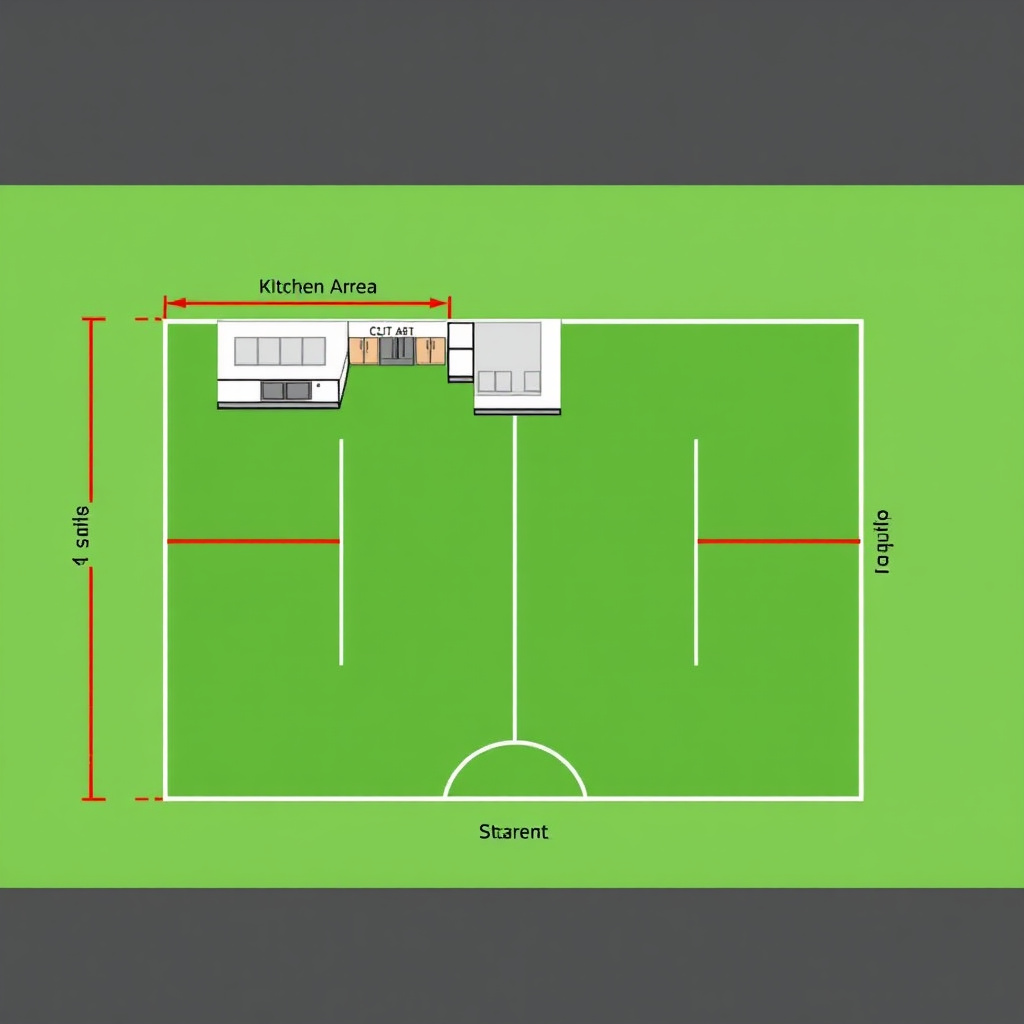
The kitchen extends 7 feet from the net towards each side of the court. Since a standard pickleball court is 20 feet wide, the kitchen covers the full width from left sideline to right sideline but only 7 feet deep.
These measurements are standardized by the USA Pickleball Association and must be maintained for official play to ensure fairness and consistent gameplay dynamics.
Difference Between Kitchen and Non-Volley Zone
The terms 'kitchen' and 'non-volley zone' are interchangeable in pickleball. Both refer to the same 7-foot zone adjacent to the net where volleys are forbidden.
Understanding this terminology helps players abide by rules that prevent volleys from this area, keeping the rally fair by limiting aggressive net play.
How the Kitchen Size Influences Game Play
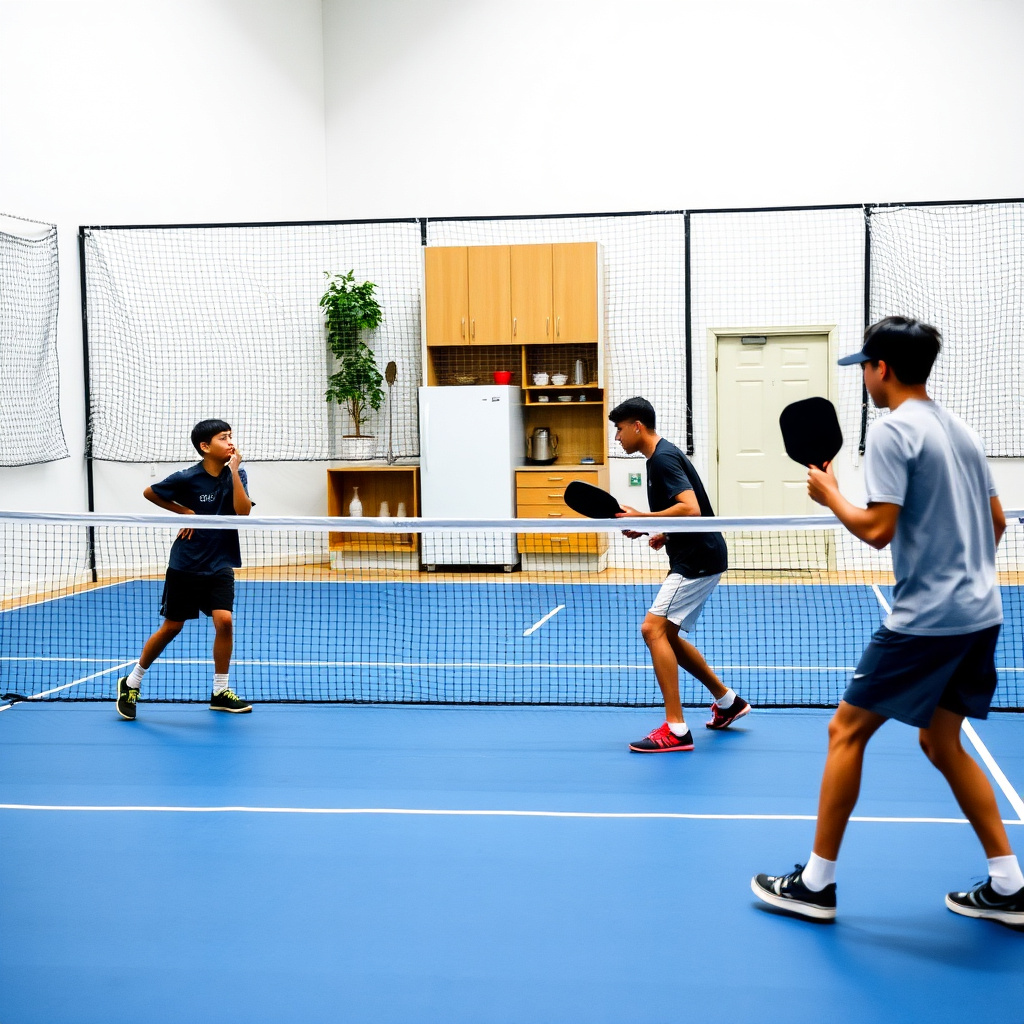
Volleys and Kitchen Rules
Players cannot step into the kitchen to volley a ball. They may enter the kitchen to play a ball but only after it bounces. This rule emphasizes control, forcing players to be strategic when approaching the net.
By limiting volleys near the net, the kitchen size balances offensive and defensive play, preventing dominating net smashes that could end rallies prematurely.
Tactical Considerations Around the Kitchen
Knowing the kitchen dimensions helps players plan drop shots just beyond the zone’s boundary, forcing opponents to step in and hit after the bounce.
Players use the kitchen size to position themselves optimally, either staying behind to drive the ball or cautiously moving forward while respecting the non-volley zone.
Marking the Kitchen on Your Court
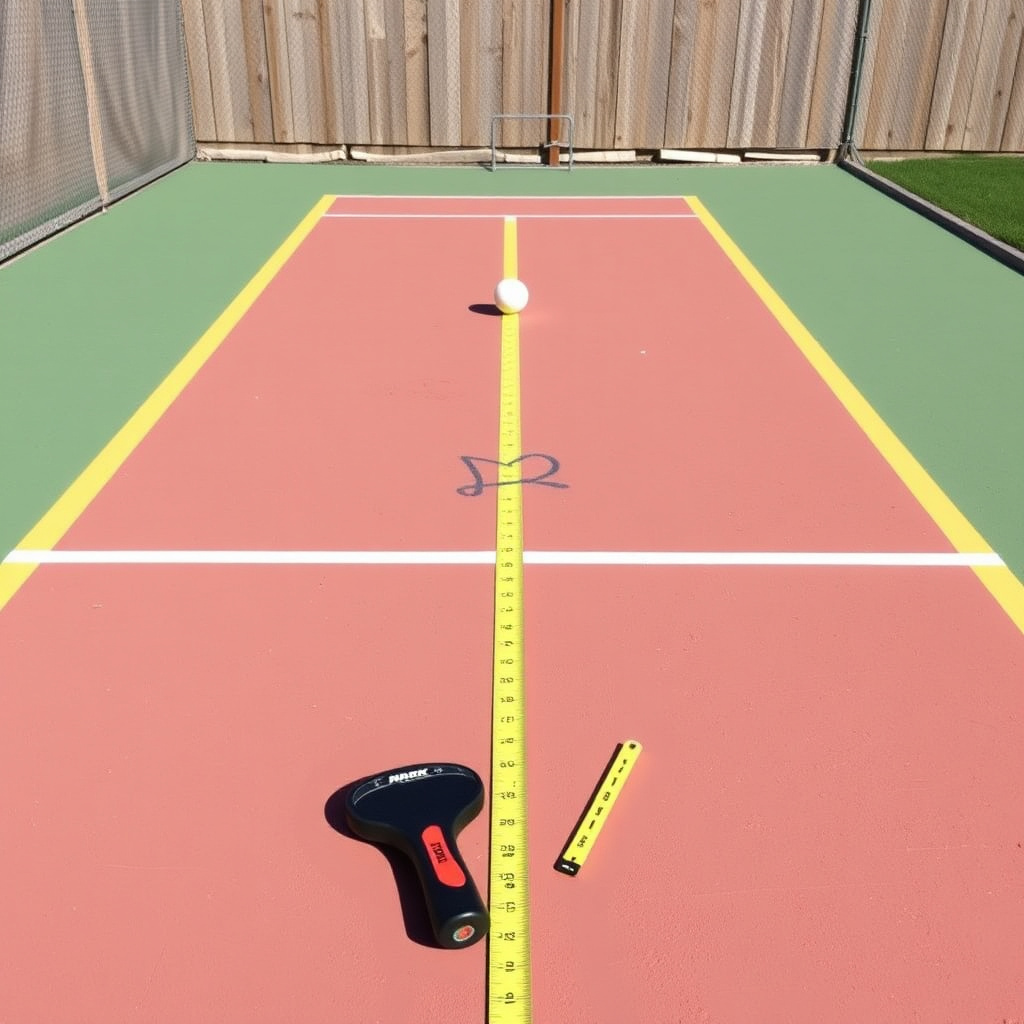
Materials and Methods for Kitchen Lines
Typical court marking involves painting or taping lines 7 feet back from the net on each side, across the full 20-foot width. Common materials include durable court paint and inline tape suitable for various surfaces.
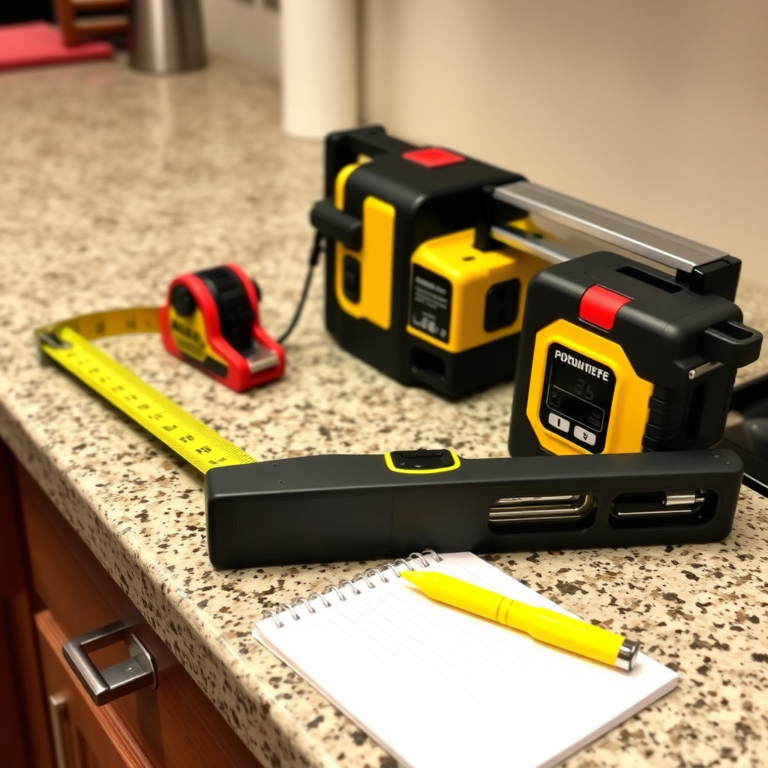
Accurate measurement tools such as tape measures or laser distance meters ensure the kitchen is correctly sized for regulation play.
- Use high-contrast paint for visibility
- Measure twice to avoid mistakes
- Allow paint to dry fully before use
Maintaining Kitchen Lines Over Time
Paint fades or tape peels with exposure, so periodic maintenance is necessary. For permanent courts, re-striping can be scheduled annually or as needed.
For portable courts, consider removable tapes or mats with pre-marked kitchen areas for convenience and accuracy.
Non-Volley Zone Variations in Different Pickleball Formats

Standard vs. Mini Pickleball Court Kitchens
Standard pickleball courts use the fixed 7-foot kitchen dimension. However, mini or portable courts designed for smaller spaces may adjust boundaries but typically maintain proportional non-volley zones.
Altered formats might have smaller kitchen areas but aim to replicate the same gameplay balance by scaling dimensions accordingly.
Impacts of Kitchen Size on Casual and Tournament Play
Tournament matches strictly use the official 7-foot kitchen size, ensuring consistency worldwide. Casual play may vary depending on available space or court setup, especially in community centers or backyards.
The kitchen’s official size thus plays a key role in standardizing skill demands and tactics across competitive play.
Common Misconceptions About Kitchen Size in Pickleball
Is the Kitchen Size Different for Singles vs. Doubles?
The kitchen size remains 7 feet for both singles and doubles play, contrary to some beliefs that singles courts have smaller kitchens.
All players follow the same non-volley zone dimensions to keep the rules uniform regardless of game format.
Misjudging the Kitchen Boundary Lines
Players sometimes confuse the boundary of the kitchen with the baseline or sideline. The kitchen line extends entirely across the court parallel to the net and must be observed carefully during play.
Improper awareness can lead to faults such as volleying within the kitchen, costing important points.
History of the Kitchen Size in Pickleball
Origins of the Non-Volley Zone
The non-volley zone was introduced to maintain fair play as pickleball evolved from its origins on Bainbridge Island in the 1960s, addressing issues with volleys dominating the net area.
Setting the kitchen at 7 feet allowed a balanced and enjoyable game that rewards skillful shot placement rather than net domination.
For official regulations and detailed measurement standards of the pickleball kitchen, you can consult the USA Pickleball Association kitchen size rules. USA Pickleball Association kitchen size rules.
Evolution of Kitchen Size Regulations
Early variations in the kitchen size were tested, but consensus standardized the 7-foot dimension to align with court size and player movement.
This uniform rule now underpins all official pickleball gameplay and is maintained by governing bodies internationally.
Pickleball Kitchen Size Variations Comparison
Here's a quick look at how kitchen dimensions vary or stay consistent across different court types and play formats.
| Court Type | Kitchen Depth (feet) | Court Width (feet) | Usage |
|---|---|---|---|
| Standard Court | 7 | 20 | Official tournament and recreational play |
| Mini Portable Court | Proportional (5-6) | Typically 14-18 | Casual or space-limited environments |
| Singles Play | 7 | 20 | Same as doubles for consistency |
| Backyard Modified Court | Varies, often 6-7 | Varies | Home use with informal rules |
Frequently Asked Questions
What happens if a player volleys the ball inside the kitchen?
If a player volleys the ball while standing inside the kitchen, it results in a fault. The player must let the ball bounce before entering the kitchen to hit it.
Can you step into the kitchen to retrieve a ball?
Yes, players can step inside the kitchen to play balls that have bounced there. The volley restriction only applies if the ball has not bounced first.
Is the kitchen size adjustable for beginners?
While official play requires 7 feet, beginners may use smaller kitchens on portable courts to simplify the game and reduce court space needs.
Does the kitchen change between indoor and outdoor courts?
No, the kitchen dimensions remain the same regardless of playing indoors or outdoors to maintain gameplay consistency.
How does the kitchen size affect offensive strategies?
The kitchen size forces players to place softer shots just beyond the non-volley zone, encouraging skillful drop shots and forcing opponents out of position.
Key Takeaways
- The pickleball kitchen is 7 feet deep from the net and spans the full 20-foot court width.
- It is also called the non-volley zone and prevents volleying within this area.
- Kitchen size plays a major role in strategy by limiting aggressive net play.
- The 7-foot kitchen measurement is standard across singles and doubles matches.
Conclusion
Understanding the kitchen size in pickleball is fundamental to grasping how the game is played and regulated. The 7-foot depth from the net ensures that players must modify their shot selections and positioning, balancing defense and offense. By familiarizing yourself with this zone’s exact dimensions, you can avoid common faults, improve your tactical approach, and enjoy longer rallies.
For players or organizers setting up courts, marking the kitchen accurately using official measurements is essential for legitimate play. Whether preparing for tournament-grade courts or casual backyard matches, sticking to the 7-foot non-volley zone helps keep the game fair and enjoyable. Mini courts may adjust kitchen proportions, but the 7-foot kitchen remains the benchmark for standardized play.
If you’re starting out in pickleball or upgrading your court, measure the kitchen carefully and practice respecting its boundaries during games. Over time, playing with awareness of the kitchen’s size will make your game more strategic and less fault-prone. You can find official kitchen measurement guidelines from sources like the USA Pickleball Association to guide your setup.