How to Build an Outdoor Kitchen: A Step-by-Step Guide for Your Backyard
Building an outdoor kitchen involves planning the layout, selecting durable materials, and installing essential cooking appliances like grills, sinks, and refrigeration. Start by determining where the kitchen will go, choosing materials suited for outdoor conditions, and deciding on your cooking setup, whether simple or elaborate.
An outdoor kitchen enhances your backyard by providing a dedicated area for cooking and entertaining, making summer gatherings more enjoyable and convenient. Designing it well improves functionality and withstands weather, ensuring long-term use.
This article covers preparation steps, design tips, essential components, material options, appliance choices, and finishing touches to guide you through building an outdoor kitchen that fits your style and needs.
Planning Your Outdoor Kitchen Layout

Choosing the Location
Selecting the right spot means considering proximity to your home’s interior kitchen, ensuring access to utilities like water and electricity, and choosing a level area with good drainage. A location with some natural shade can help with comfort during use.
Think about sightlines and privacy both for cooking and for guests. Avoid placing the kitchen directly under large trees to prevent debris from falling, and check local regulations on outdoor structures.
- Near indoor kitchen for convenience
- Accessible to utilities
- Level, well-drained ground
- Away from overhanging trees
- Good airflow and ventilation
Designing Functional Zones
Divide the kitchen into zones such as cooking, prep, cleaning, and eating to improve flow and efficiency. Each zone should have adequate counter space and storage close at hand.
Consider how many people will cook or entertain simultaneously to size your space and zones properly. A typical layout includes a grill area, prep counters, a sink, and a refrigerator or cooler.
- Cooking zone with grill or cooktop
- Prep zone with cutting space
- Cleaning zone with sink
- Refrigeration zone
- Dining or seating area nearby
Selecting Materials for Durability and Style

Countertop and Surface Options
Choose materials such as granite, concrete, or stainless steel for countertops to withstand outdoor wear and resist heat and moisture. Granite offers a natural look and is highly durable, while concrete can be customized in color and shape.
Avoid porous materials prone to staining or cracking in freezing temperatures. Sealing stone or concrete surfaces yearly extends lifespan and maintains appearance.
- Granite: durable and heat-resistant
- Concrete: customizable and sturdy
- Stainless steel: sleek and weatherproof
- Avoid untreated wood or porous stone
Cabinets and Storage Solutions
Outdoor cabinets should resist rust, rot, and UV damage. Marine-grade polymer, stainless steel, and specially treated wood are common choices. Proper sealing and weatherstripping protect contents from moisture and pests.
Modular cabinet systems tailored for outdoor use simplify installation and maintenance. Also consider ventilation to prevent mold and mildew inside cabinets.
- Stainless steel cabinets for rust resistance
- Marine-grade polymer: durable and UV-resistant
- Composite wood with weatherproofing
- Include drainage and ventilation holes
Choosing the Right Outdoor Kitchen Appliances
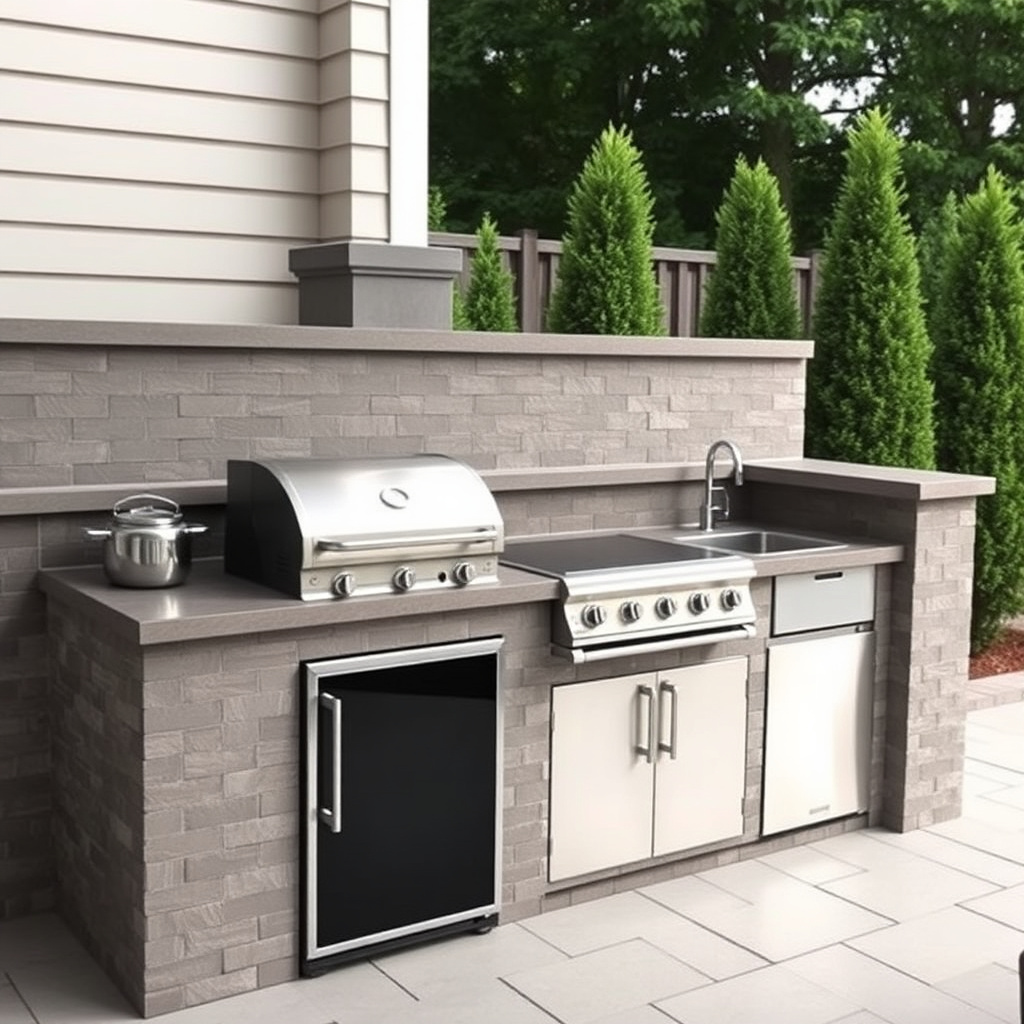
Grills and Cooking Equipment
Grills are the core of most outdoor kitchens, available in gas, charcoal, or electric models. Gas grills offer convenience and temperature control, charcoal provides smoky flavor, and electric grills are cleaner and easier for some spaces.
Additional equipment such as side burners, pizza ovens, and smokers expand cooking options. Select appliances that fit your cooking style and match your outdoor kitchen’s electrical and gas capabilities.
- Gas grills for quick temperature changes
- Charcoal grills for authentic flavor
- Electric grills in restricted areas
- Additional side burners and pizza ovens
Refrigeration and Cleaning Fixtures
An outdoor refrigerator or beverage cooler keeps drinks and ingredients handy, improving efficiency. Choose models designed for outdoor use with sealed compressors and weatherproof materials.
A sink with running water simplifies cleaning and food prep outdoors. Make sure your plumbing setup supports proper drainage and water supply to the outdoor location.
- Outdoor-rated refrigerators for durability
- Built-in or freestanding beverage coolers
- Weatherproof sinks with drainage
- Proper plumbing connections
Installing Utilities and Infrastructure

Plumbing Requirements
Outdoor kitchens require water supply lines for sinks and possibly ice makers or fridges. Consider freezing in winter; install shutoff valves and insulation to protect pipes.
Plan drainage carefully to avoid standing water. Hiring a licensed plumber ensures that connections are safe, meet codes, and function reliably without leaks.
- Frost-proof water valves
- Proper drainage slopes
- Licensed plumber installation
- Insulated and protected pipes
Electrical Setup and Safety
Power is needed for lights, refrigerators, outlets, and some cooking appliances. Use outdoor-rated wiring and weatherproof outlets with ground-fault circuit interrupters (GFCIs) for safety.
Install adequate lighting to illuminate cooking and dining areas. Solar or LED options reduce energy consumption and add ambiance.
- Outdoor-rated wiring and outlets
- GFCI breakers for safety
- Sufficient task and ambient lighting
- Professional electrician advice recommended
Finishing Touches and Accessories

Seating and Dining Areas
Comfortable seating encourages guests to linger and socialize. Options range from bar stools at a serving counter to dining sets under a pergola or umbrella.
Choose weather-resistant materials like treated wood, metal with cushions, or synthetic wicker. Arrange seating to balance accessibility and space.
- Bar seating at kitchen counters
- Patio dining tables and chairs
- Weather-resistant cushions
- Shading options: umbrellas or pergolas
Lighting and Decor
Lighting enhances safety and ambiance during evening use. Incorporate task lighting around grills and prep areas plus ambient string lights or lanterns.
Add personal touches such as potted plants, outdoor rugs, or decorative backsplashes to make the space inviting and cohesive with your home’s style.
- Task and ambient lighting combinations
- Weatherproof lighting fixtures
- Decorative elements tailored to style
- Plants and outdoor-friendly accents
Maintaining Your Outdoor Kitchen for Longevity

Routine Cleaning and Protection
Regularly clean cooking surfaces, countertops, and appliances with non-abrasive products designed for outdoor use. Cover grills and appliances when not in use to protect them from dust and moisture.
Inspect seals, cabinetry, and plumbing connections periodically for damage or wear. Keeping these in good shape prevents costly repairs and prolongs the kitchen’s life.
- Use appropriate cleaners for each surface
- Cover appliances in bad weather
- Check and repair seals annually
- Flush outdoor sink drains periodically
For additional background and design ideas, see the comprehensive outdoor kitchen overview on Wikipedia. Outdoor kitchen on Wikipedia.
Seasonal Maintenance and Storage
In colder climates, winterize your outdoor kitchen by draining water lines, removing sensitive components, and storing cushions indoors. Disconnect propane tanks and store according to safety guidelines.
Plan seasonal deep cleanings before and after heavy-use months to prepare your kitchen for optimal performance and enjoyment year-round.
- Drain and insulate pipes before freezing
- Store cushions and linens indoors
- Disconnect and store propane tanks safely
- Schedule thorough seasonal cleanings
Outdoor Kitchen Designs Category Comparison
Here’s a comparison of common outdoor kitchen types based on features, complexity, and cost to help find the best fit for your needs.
| Category | Complexity | Typical Cost Range | Main Materials | Ideal For |
|---|---|---|---|---|
| Basic Grill Station | Low | $1,000 – $3,000 | Stone or brick base, metal grill | Casual cooking with minimal setup |
| Built-in Modular Kitchen | Medium | $5,000 – $15,000 | Stone, concrete, stainless steel | Frequent entertainers and serious cooks |
| Full Outdoor Kitchen with Appliances | High | $15,000 – $50,000+ | High-end stone, metal cabinetry, varied appliances | Extensive outdoor cooking and hosting |
| Portable Outdoor Kitchen | Very Low | $500 – $2,000 | Portable cart with grill and shelves | Small spaces, occasional use |
| Custom Luxury Kitchen | Very High | $50,000+ | Premium stone, custom cabinetry, embedded appliances | High-budget projects with designer features |
Frequently Asked Questions
Do I need a permit to build an outdoor kitchen?
Permit requirements vary by location and the size or complexity of your kitchen. Check with local building authorities to learn if permits are needed for plumbing, electrical work, or structural modifications.
Can I install an outdoor kitchen myself?
Basic setups can be DIY projects, but plumbing, gas, and electrical installations usually require licensed professionals for safety and legal compliance.
What’s the best material for outdoor kitchen countertops?
Granite and concrete are popular for durability and heat resistance, while stainless steel offers a weatherproof, modern look. Avoid porous materials that stain or degrade outdoors.
How do I protect my outdoor kitchen appliances from weather?
Use covers designed for grills and refrigerators, apply sealants on surfaces, store cushions indoors, and schedule regular maintenance to prevent rust and damage.
Are charcoal grills better than gas grills in an outdoor kitchen?
Charcoal grills provide a smoky flavor and traditional cooking experience but require more effort to manage. Gas grills offer convenience and quick temperature control, which suits casual or frequent cooking.
Key Takeaways
- Plan your outdoor kitchen based on layout, utilities, and your cooking habits.
- Choose durable materials like granite and stainless steel for longevity.
- Select appliances suited to your preferred cooking style and space.
- Maintain and protect your kitchen to extend its lifespan.
Conclusion
Deciding how to build an outdoor kitchen involves balancing function, durability, and your lifestyle preferences. Carefully planning the location, layout, and materials ensures your project will work well in your outdoor environment and provide years of enjoyment. The goal is to create a space that feels like a natural extension of your home and simplifies outdoor cooking.
If you aim for casual gatherings, a basic grill station with ample prep space could suffice. For more serious cooking and entertaining, consider a built-in modular kitchen combining durable stone surfaces with stainless steel appliances including a gas grill and refrigerator. Luxury designs allow adding pizza ovens, smokers, and custom cabinetry to tailor the setup precisely to your needs. Understanding your usage guides these choices.
Begin by mapping your available space and contacting professionals for plumbing and electrical work to ensure safety and compliance. Select materials and appliances that fit your budget and climate, focusing on quality to reduce long-term maintenance. With thoughtful planning and execution, building an outdoor kitchen will transform your backyard into a welcoming culinary destination.