How to Sharpen a Kitchen Knife: A Practical Step-by-Step Guide
Sharpening a kitchen knife restores its cutting edge, making food preparation safer and more efficient. To sharpen a kitchen knife properly, you need to remove the dull, worn metal by grinding the blade against a sharpening stone, honing rod, or an electric sharpener while maintaining the correct angle. This restores the blade’s sharpness and extends its lifespan.
Sharp knives reduce the risk of accidents as they cut cleanly through ingredients without excessive force. Many home cooks overlook sharpening or rely on improper methods, which can damage the blade or leave it blunt. Understanding how to sharpen a kitchen knife improves your kitchen skills and preserves your investment in quality cutlery.
This guide covers key sharpening tools and materials, outlines step-by-step sharpening techniques, compares popular methods, discusses maintenance tips to keep knives sharp longer, and answers common questions about knife care and sharpening.
Essential Tools for How to Sharpen a Kitchen Knife

Sharpening Stones: Whetstones and Their Varieties
Whetstones are flat abrasive stones used to sharpen knives by grinding and honing the blade edge. They come in different grits, typically coarse (200-600), medium (800-1500), and fine (3000+), with coarse grits removing more metal quickly and finer grits polishing the edge.
Using a whetstone requires soaking it in water for about 10-15 minutes before use. The blade is then drawn across at a consistent angle, often 15-20 degrees, to create a sharp edge. Whetstones offer the most precise control over sharpening but need practice and patience.
- Coarse grit: quick reshaping of blade
- Medium grit: edge refining
- Fine grit: polishing and finishing
Honing Rods and Electric Sharpeners
A honing rod realigns a knife’s edge without removing significant metal. It is used frequently between sharpenings to maintain sharpness. Most honing rods are made of steel or ceramic and work best at a 20-degree angle, stroking the blade gently along the rod.
Electric sharpeners provide an automated way to sharpen knives with preset angles. They use abrasive wheels to grind the edge, often offering multiple stages for coarse to fine sharpening. While convenient and fast, electric sharpeners can remove more material and should be used carefully to avoid damaging premium knives.
- Steel rods realign edges
- Ceramic rods polish while honing
- Electric sharpeners have adjustable stages
Step-by-Step Process to How to Sharpen a Kitchen Knife

Preparing and Positioning the Knife and Stone
Start by soaking a whetstone in water for 10 to 15 minutes if it is a water stone. Place the stone on a non-slip surface. Hold your knife at a consistent angle, generally about 15-20 degrees for most kitchen knives, ensuring even contact with the stone’s surface.
Establishing the right angle is essential for effective sharpening. You can use an angle guide to help or estimate by imagining slicing a thin layer off the stone. Keep your fingers clear of the blade edge and use smooth, controlled motions.
Sharpening the Knife Blade on the Stone
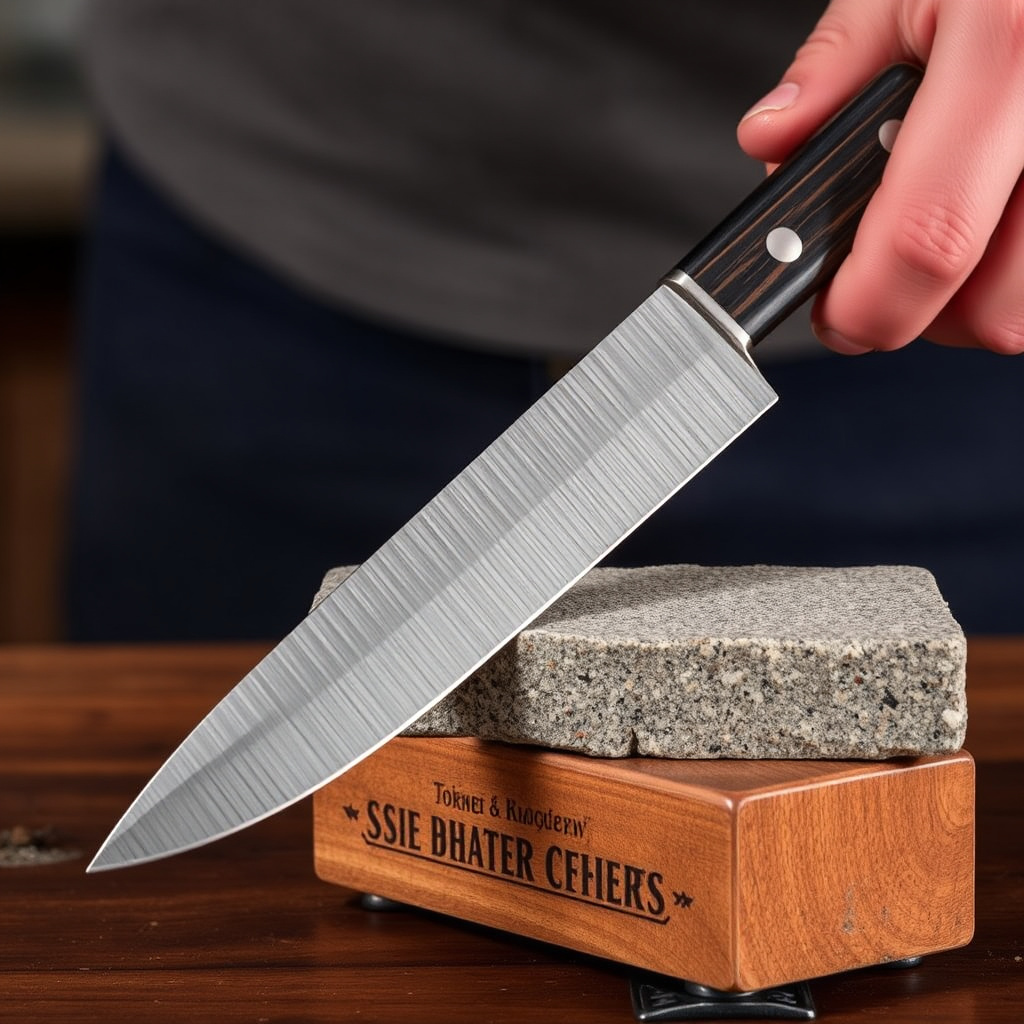
Draw the knife blade along the whetstone from heel to tip in a sweeping motion, maintaining the angle consistently. Repeat several times on one side of the blade, then flip and sharpen the other side to keep the edge even.
Progress through grits if using multiple stones: begin with coarse grit to reshape the edge, then switch to medium and fine grits for refining and polishing. Rinse the blade and stone as needed to clear metal shavings and prevent clogging.
- Maintain steady angle
- Use even pressure
- Sharpen both sides equally
- Rinse stone regularly
Alternative Methods for How to Sharpen a Kitchen Knife

Using Honing Rods to Maintain Sharpness
Honing rods are not sharpening tools but useful for realigning the blade edge in daily use. Use gentle strokes along the rod at a 20-degree angle about 5-10 times per side. This technique helps your knife cut cleanly between full sharpenings.
Regular honing can extend the time between sharpening sessions and keep your knives performing well. Ceramic rods also remove minor burrs, polishing the edge slightly, unlike steel rods which mainly realign.
Electric and Pull-Through Sharpeners
Electric sharpeners streamline the sharpening process. Insert the blade through preset angled slots for coarse and fine sharpening stages. These devices are quick and user-friendly, especially for beginners.
Pull-through sharpeners offer a similar approach with guided slots and abrasive wheels or stones. They usually provide less precision and can wear down blades unevenly if used improperly. Use these cautiously on high-quality knives.
- Multiple sharpening stages
- Preset sharpening angles
- Safe for most kitchen knives
Maintaining Your Knife Sharpness Post-Sharpening

Proper Storage and Handling to Preserve the Edge
After sharpening, store knives in a knife block, magnetic strip, or protective sheath to avoid edge dulling. Avoid tossing knives loosely in drawers where they bump against other utensils.
Always cut on suitable surfaces like wood or plastic cutting boards instead of hard materials such as glass or stone, which can rapidly blunt the edge.
- Use wood or plastic cutting boards
- Store knives individually
- Handle blades carefully
Regular Honing and Cleaning Habits
Incorporate honing into your routine every few uses to keep knives aligned and sharp. Clean knives with warm soapy water immediately after use and dry thoroughly to prevent rust.
Avoid using dishwashers for quality knives as harsh detergents and heat can degrade blade edges and handles over time.
- Hone regularly between sharpenings
- Hand wash and dry knives promptly
- Avoid dishwasher exposure
Common Mistakes to Avoid When Learning How to Sharpen a Kitchen Knife
Inconsistent Angles and Excessive Pressure
Maintaining a consistent sharpening angle prevents uneven edges that negatively affect cutting performance. Varying the angle can create a dull or misshapen blade.
Applying too much pressure on the blade during sharpening may remove excessive metal and damage the edge. Gentle, controlled strokes produce the best results while preserving blade integrity.
- Keep angle steady at 15-20 degrees
- Use light, even pressure
- Avoid rapid back-and-forth motions
For a technical overview of sharpening principles, see the Kitchen knife sharpening techniques on Wikipedia. Kitchen knife sharpening techniques on Wikipedia.
Skipping Proper Grit Progression and Blade Care
Sharpening only with coarse grit can leave a rough edge that quickly dulls, while finishing only on fine grit fails to remove enough material to fix dull blades. Use grit progression for best sharpness.
Neglecting to clean stones and knives or improper knife handling after sharpening shortens edge life and risks corrosion or chipping.
- Start coarse, finish fine
- Clean tools after use
- Store knives carefully
Kitchen Knife Sharpening Methods Comparison
Here’s a breakdown of common kitchen knife sharpening methods to help you decide which fits your needs and skill level.
| Method | Skill Required | Speed | Control | Blade Wear | Cost |
|---|---|---|---|---|---|
| Whetstone | High | Slow | Maximum | Low | Moderate |
| Honing Rod | Low | Fast | Low (maintenance only) | Negligible | Low |
| Electric Sharpener | Low | Fast | Moderate | High | Moderate-High |
| Pull-Through Sharpener | Low | Very Fast | Low | High | Low |
| Professional Sharpening Service | None | Variable | Expert | Variable | High |
Frequently Asked Questions
How often should I sharpen my kitchen knife?
Most home cooks benefit from sharpening kitchen knives every 3 to 6 months, depending on usage. Regular honing between sharpenings helps maintain edge alignment and extends sharpness.
Can I use a sharpening stone on all types of kitchen knives?
Sharpening stones work well on most steel kitchen knives. However, very hard or specialty blades may require specific techniques, so check manufacturer recommendations before sharpening.
Is honing the same as sharpening a knife?
No, honing realigns the edge without removing metal, while sharpening removes metal to create a new sharper edge. Honing is used regularly; sharpening is done less frequently.
What angle is best for sharpening kitchen knives?
Most kitchen knives sharpen best at a 15-20 degree angle, balancing sharpness and edge durability. Japanese-style knives may require slightly lower angles, around 12-15 degrees.
Can electric sharpeners damage my knives?
Electric sharpeners can remove too much metal and wear blades unevenly if used improperly. Use models designed for your knife type and avoid over-sharpening to prevent damage.
Key Takeaways
- Consistent angle is essential when sharpening knives.
- Use grit progression for the best edge refinement.
- Honing maintains sharpness between sharpenings.
- Proper storage and cutting surfaces preserve edges longer.
Conclusion
Understanding how to sharpen a kitchen knife effectively means balancing technique, tools, and care to reshape and maintain a finely tuned edge. Selecting the right method depends on your comfort with sharpening and the particular knives you own. Whether using whetstones for precise control or electric sharpeners for convenience, mastering sharpening preserves your knives’ utility and safety.
For home cooks willing to invest time, whetstones combined with regular honing offer durable sharpness and edge precision that other methods lack. Electric sharpeners and pull-through devices provide faster solutions but require caution to avoid excess blade wear. Professional sharpening services are ideal for high-end knives or those unfamiliar with manual techniques.
Start by practicing on inexpensive knives or using honing rods frequently to keep edges aligned. When ready, experiment with whetstones and develop consistency in angle and pressure. With regular maintenance and mindful use, your kitchen knives will stay sharp, improving cooking efficiency and safety over the long term.